
While the current environment of lower commodity prices presents challenges for ARM, we are well-positioned to navigate these headwinds through our relentless focus on operational efficiency, cost management and disciplined capital allocation. Our proactive strategies in these key areas will enable us to capitalise on future market recoveries.
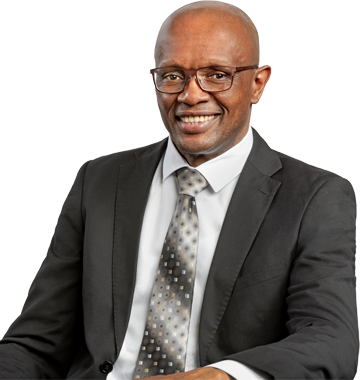
Phillip Tobias
Chief executive officer (CEO)
Underscoring our commitment to zero harm, safety is a key performance indicator in executive remuneration. Safety achievements during the year included:
Regrettably, Mr Thomas Ubisse, team leader, was fatally injured in a fall-of-ground accident on 16 June 2024 at Middelpunt Hill shaft, Bokoni Platinum Mine. Support and counselling were offered to his family members and all affected employees through the employee assistance programme. We extend our sincere condolences to Mr Ubisse’s family, friends and colleagues. Independent root-cause investigations are underway as we continue to work towards zero harm at our operations.
The health and wellbeing of our people is a priority. We also continued to assist our host communities, suppliers and other stakeholders as much as possible, as detailed in the ESG report.
In F2024, ARM created total value of R12.4 billion (F2023: R21.2 billion). Of this, R3.5 billion was paid to shareholders as dividends and around R300 million accrued to providers of capital. We also reinvested R2.0 billion in the group to support our continued growth.
The financial and operational reviews on pages 46 to 93 detail our performance for the year. My review focuses on progress against strategic objectives more broadly and the significant infrastructure challenges our operations continue to face.
To navigate these uncertain economic cycles and ensure maximum value from our portfolio of competitive assets, we are focusing on:
Our world is truly interconnected. During the year, companies around the world had to deal with knock-on global effects of escalating geopolitical tensions, commodity volatility and economic uncertainty exacerbated by elections in 64 countries this year. In South Africa, which also held national elections in 2024, there was some good news on pervasive economic and infrastructural issues:
While still early, the post-election government of national unity appears to be functioning, and new ministers with key portfolios appear committed to resolving issues that have hampered economic growth and stability for too long. ARM is working with industry bodies and other mining groups to sustain the momentum.
Against this background, we have concentrated on ensuring our operations perform optimally and conserving cash by deferring projects where feasible. At the same time, we have retained our focus on organic or acquisitive growth.
In line with our strategic objective of allocating capital to value-creating investments, and commitment to supporting the transition to a low-carbon world, we acquired a 15% stake in Toronto-listed Surge Copper Corporation (Surge) in April 2024. Copper is an important commodity, and our aim is to grow and to acquire copper assets that ARM will manage and own.
Surge is advancing a copper polymetal mine in British Columbia. It owns a large, contiguous mineral claim package that hosts multiple deposits of copper, molybdenum, gold and silver – metals that are critical inputs to the low-carbon energy transition and associated electrification technologies. Copper in particular is a critical material for wind and solar technology, energy storage and electric vehicles. Surge’s assets include:
Two Rivers Merensky project
A decision was made to put the project on care and maintenance from July 2024 driven by the current downward cycle in the PGM market. The Merensky concentrator plant construction and the first two mining levels have been completed.
The future restart of the Two Rivers Merensky project will be evaluated when PGM prices have recovered.
Bokoni Platinum Mine
The current priority is to conserve cash while ramping up production in a phased and measured manner, considering depressed commodity prices.
This approach will maximise the utilisation of Bokoni’s existing surface and concentrator plant infrastructure, reducing capital costs. Subsequent to year end, the construction of a chrome recovery plant was approved by the board.
The ARM TSF management policy and standard, which align with the ICMM’s GISTM, are being implemented at all our platinum and ferrous operations. GISTM sets a global benchmark for achieving strong social, environmental and technical outcomes in managing TSFs, with the goal of zero harm to people and the environment. ARM and its joint-venture partners have adopted GISTM at all mines, covering 13 active TSFs.
In F2024, ARM released a public report on conformance to the GISTM, which is available on our website. Operational reviews from page 62 provide more details.
Infrastructural issues, particularly the supply of logistics, water and power, continued to hamper the performance of our operations in the review period. Although much work is underway to address these challenges, as noted, turning these massive state-owned entities around will take time. At an operational level, teams are focused on improving efficiency and containing costs to counter the impact of above-inflation input cost escalations.
Logistical constraints
For ARM, Transnet’s rail and port performance have the greatest impact on our iron ore, manganese ore and coal exports.
To address deep-rooted logistical challenges, the Minerals Council established joint collaboration structures with Transnet in December 2022 to stabilise and improve the transport of commodities through the rail lines and ports of South Africa. ARM is actively involved in these structures to ensure we achieve the goal of improved, efficient and cost-effective transportation of our commodities for the benefit of our shareholders, stakeholders and the country.
In particular, the activities of the joint National Logistics Crisis Committee include policy reforms and providing expertise to Transnet. This is in addition to significant involvement and investment in infrastructure by members in each of the corridors (coal, iron ore, manganese and chrome). Progress is moving in the right direction, assisted by the appointment of permanent new leadership at the Transnet board and executive levels. Policy reforms are providing the required momentum to achieve structural changes and improvements to the national logistics network.
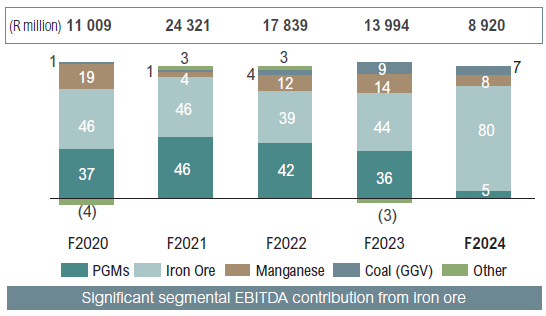
In a year again characterised by volatile commodity prices, our diversified portfolio continued to benefit the group. This diversification positions ARM well (see bar chart below), as we focus on operating a world-class business in a challenging sector.
In summary:
Global growth remains subdued by historical standards, influenced by persistent core inflation, high borrowing costs, reduced fiscal support, ongoing challenges in the Chinese property and construction sectors, the long-term effects of the pandemic, geopolitical tensions including the Russia-Ukraine and Israel-Gaza conflicts and the increased threat of geo-economic fragmentation.
The global economy has proved resilient, inflation has more recently declined within sight of central bank targets, and risks to the outlook are becoming more balanced with advanced economies likely to achieve their inflation targets sooner than emerging markets. As central banks aim for a smooth economic transition, they must balance inflation concerns with appropriate policy timing. Faster-than-expected inflation declines could prompt central banks to ease policies sooner, aided by increased labour force participation. Medium-term fiscal consolidation is essential to restore fiscal flexibility and support sustainable debt levels, tailored to each country’s circumstances. Advances in artificial intelligence and robust structural reforms could further enhance productivity and economic growth.
The outlook for PGMs presents a mixed scenario of challenges and opportunities. Platinum is expected to record a significant supply shortfall due to reduced shipments and restructuring initiatives. Despite this, automotive demand for platinum is anticipated to remain strong, despite a slight decline. Palladium demand from the automotive sector is projected to decrease, primarily driven by the rise of electric vehicles and increased use of platinum in gasoline autocatalysts. Rhodium is forecast to be in slight deficit, with automotive demand also expected to decline. Overall, the PGM market will be influenced by economic and geopolitical uncertainties, however, easing interest rates and tightening market fundamentals could support prices in the medium to long term.
Chinese steel demand has weakened, leading to declining margins and lower production expectations, although this is partially offset by increased exports. Global crude steel production is expected to remain stable over the medium term, with a gradual decline in Chinese production offset by increased global demand. The Simandou project in Guinea is expected to commence production in late 2026, placing further downward pressure on iron ore prices over the long term. Decarbonisation policies are likely to drive higher premiums for environmentally friendly high-grade iron ore.
Recent spikes in manganese prices, primarily due to supply coming offline at South 32’s GEMCO have normalised to pre-GEMCO levels. Thermal coal demand globally is expected to decrease, largely driven by increasing renewable energy generation and lower natural gas prices, placing downward pressure on thermal coal prices over the medium to long term.
Infrastructure challenges, rail and port performance, power reliability and water security remain significant risks for ARM. These issues are likely to continue impacting our export volumes and unit cost of production. The dependence on a single customer at Beeshoek exacerbates these challenges. We are actively working with government bodies and other stakeholders to develop sustainable solutions that will benefit ARM, the mining industry, communities and the broader country.

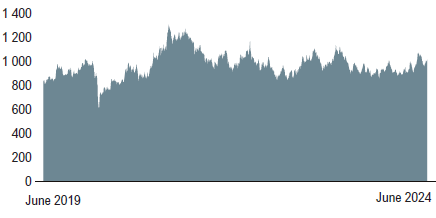
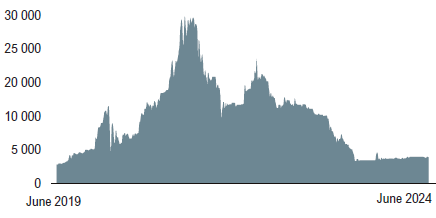
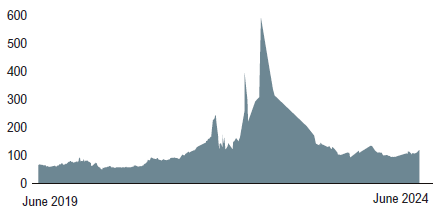
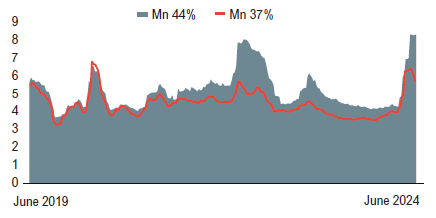
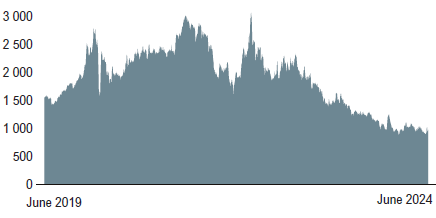
While ARM is currently facing challenges due to the downturn in commodity prices, our world-class operations across the commodities we mine are well capitalised to benefit when prices recover. ARM’s robust balance sheet, supported by its cash reserves, provides a solid financial foundation and investment case.
ARM is building resilience by enhancing productivity, implementing cost-saving measures, and efficiently allocating capital. The current challenges caused by the downturn in the PGM market, along with lower iron ore and thermal coal prices, necessitate a focus on preserving cash. Management is committed to responsible capital allocation. Equally, ARM remains fully committed to fostering mutually beneficial relationships with all our stakeholders to build a resilient and sustainable business that delivers competitive returns for shareholders.
The skills and commitment of our employees underpin our ability to create sustainable value. I thank all my colleagues for the value they add to our group, as well as our executive chairman and the board for their expert direction and counsel.
To ensure we build a resilient and enduring business that creates sustainable value for all, we are committed to maintaining mutually beneficial relationships with all our stakeholders and joint-venture partners.
Phillip Tobias
CEO
25 October 2024