
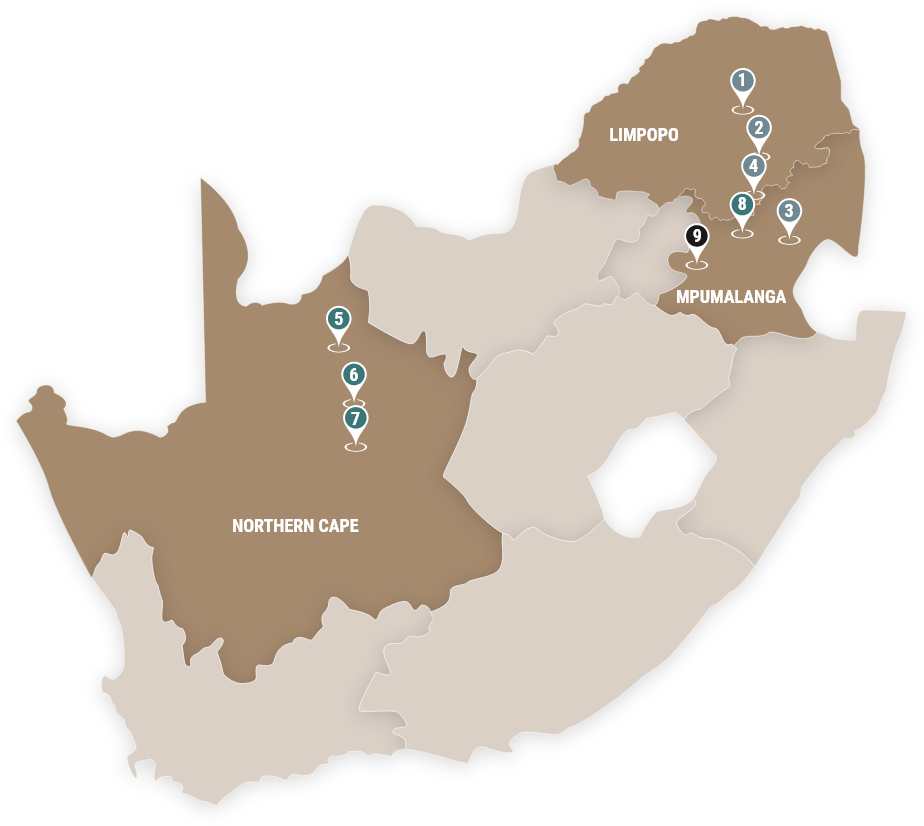
ARM operations are located in the Northern Cape, Limpopo and Mpumalanga provinces in South Africa.

 |
Bokoni Platinum Mine |
 |
Modikwa Platinum Mine |
 |
Nkomati Nickel Mine |
 |
Two Rivers Platinum Mine |

 |
Black Rock Mine (Nchwaning and Gloria) |
 |
Khumani Mine |
 |
Beeshoek Mine |
 |
Machadodorp Works |

 |
Participative Coal Business (PCB) |
| Goedgevonden Coal Mine (GGV) |
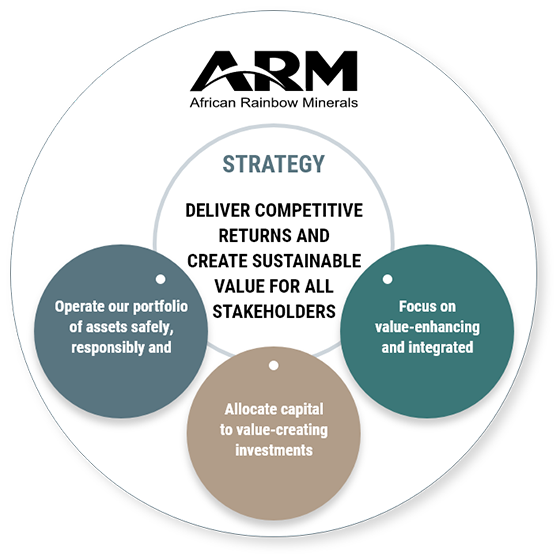
Deliver competitive returns and sustainable value
Our long-term strategy is unchanged but we continually review short-term priorities to align with our strategic objectives and incorporate emerging issues, particularly decarbonisation into our short, medium and long-term view.
Owner-operator
Strategic investments
Entrepreneurial management
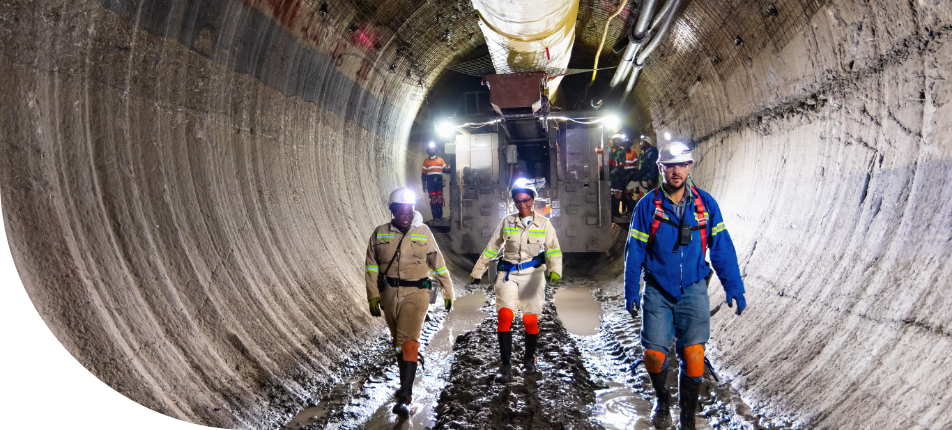
Investing in our employees
Partnering with communities and other stakeholders
Application of innovative technology
Aim for operational excellence
Improve the lives of those in communities neighbouring our operations
Provide a safe and healthy work environment
Work responsibly to achieve balance between the economic, social and environmental aspects of our business
Maintain a non-discriminatory workplace
Maintain the highest standards of corporate governance

Why
by responsibly and efficiently operating our assets and managing people
How
Measured by

Why
by prudently managing financial capital
How
Measured by

Why
by investing in growth and innovation, supporting sustainable responses to the changing operating environment
How
Measured by
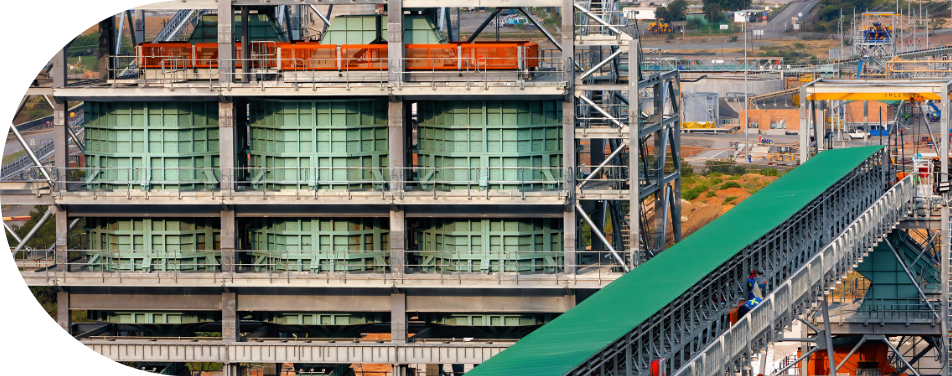
ARM, through its wholly owned subsidiary, African Rainbow Minerals Platinum Proprietary Limited, acquired Bokoni Platinum Mines Proprietary Limited (Bokoni) in September 2022. Bokoni is a large, high-grade, long-life UG2-led asset with a brownfield foundation located on the north-eastern limb of the Bushveld Complex in Limpopo, South Africa.
ARM's long-term PGM market outlook remains constructive, notwithstanding the anticipated impact of battery electric vehicle penetration. This view is supported by anticipated resilience in PGM industrial demand, and the enduring role of PGMs across automotive applications. Sustained underinvestment, accelerating shaft depletion in South Africa and structural decline across other producing regions are collectively expected to progressively reduce primary supply. These dynamics are expected to move the platinum market into deficit, providing support for the PGM basket price and incentivising new production.
Bokoni is a strategic, long-term growth asset underpinned by a large, high-grade UG2 Mineral Resource, the second largest PGM Mineral Resource base in South Africa, with the higher-grade UG2 Reef accounting for approximately two-thirds of the orebody. The project presents a clear, long-term value-creation opportunity to scale ARM's PGM portfolio, enhance its global competitiveness and pursue further valueaccretive organic growth.
Bokoni is endowed with a world-class UG2 Mineral Resource of 329.4Mt with an average milled grade of 6.1g/t (6E). The significant resource base combined with the high-grade characteristic of the orebody, reaffirms ARM's strategic rationale of securing a long-life UG2 asset that enhances the scale, quality and competitiveness of ARM's PGM portfolio while growing the company's total copper equivalent production.
The development plan has evolved in response to PGM price volatility, cost inflation and operational learnings. At the end of F2025, ARM suspended ore mining and milling operations while advancing ore reserve development and re-evaluating the optimal mining method, transitioning from an initial single-phase, fully mechanised concept to a more phased and flexible strategy. This culminated in the completion of the revised definitive feasibility study (DFS), which forms the basis for the 180ktpm project. In light of the steep dipping orebody, the mining method has been revised to adopt a hybrid approach, integrating mechanised off-reef development with conventional stoping in order to optimise ore grade and revenue per tonne while preserving capital efficiency.
The project will be executed and delivered through a phased approach. The refurbished 60ktpm UG2 concentrator plant is scheduled to commence production in 1H F2028. This will be followed by the commissioning of the new 120ktpm UG2 concentrator plant in 2H F2030, enabling a capital-efficient combined production capacity of up to 180ktpm.
The estimated capital expenditure for the project is R15.2 billion (nominal) and is expected to be deployed over a seven-year period from F2027 to F2033. Peak project funding will be lower than total estimated capital expenditure, supported by revenue generation from the 60ktpm UG2 concentrator plant from 1H F2028. The project is expected to be funded mainly by ARM, cash generated by Bokoni during ramp-up, as well as external debt funding to the extent required.
The project is expected to deliver an NPV of R5.9 billion, based on the future capital expenditure of R15.2 billion and a nominal post-tax discount rate of 18.47%. The expected IRR on the future cash flows is 28.0%, with a payback period of 6.3 years. These returns are based on a long-term average real 6E basket price of R31 161 per PGM ounce and only up to the remaining 19 years of the purchase of concentrate agreement. As only approximately 13% of Bokoni's UG2 Measured and Indicated Mineral Resources are expected to be depleted during this period, there is significant potential to extend the life-of-mine beyond the initial 19-year plan.
The project is expected to reach steady state in 2032, with annual production of 2.16 million milled tonnes at an operating cost of R2 061 per tonne (real) and generating real post-tax cash flow of approximately R3.9 billion. This will contribute around 350 000 to 400 000 6E PGM ounces to ARM's Platinum portfolio each year.
The project is expected to position Bokoni below the 50th percentile of the global PGM cost curve, complementing ARM's existing interests in Two Rivers Platinum Mine and Modikwa Platinum Mine, and further reinforcing ARM's positioning as a globally competitive, low-cost PGM producer.
Management and the board have a high level of confidence in the DFS. This is underpinned by the fact that Bokoni is a brownfield-led expansion, which materially derisks the project. The project benefits from an existing operating footprint, comprising the established and new declines, the existing 60ktpm UG2 concentrator and surface infrastructure. The commissioning of the existing 60ktpm UG2 concentrator ahead of the new plant further reduces execution risk.
Production capacity: 180ktpm comprising the existing 60ktpm concentrator and a new 120ktpm concentrator
Estimated nominal project capital expenditure: R15.2 billion
First production from the refurbished 60ktpm concentrator: scheduled for 1H F2028
Commissioning of the new 120ktpm concentrator: scheduled for 2H F2030
Anticipated annual steady-state production: approximately 350 000 to 400 000 6E PGM ounces per annum
Post-tax net present value (NPV): R5.9 billion, using a nominal post-tax discount rate of 18.47%
Expected internal rate of return (IRR): 28.0%
Expected payback period: 6.3 years
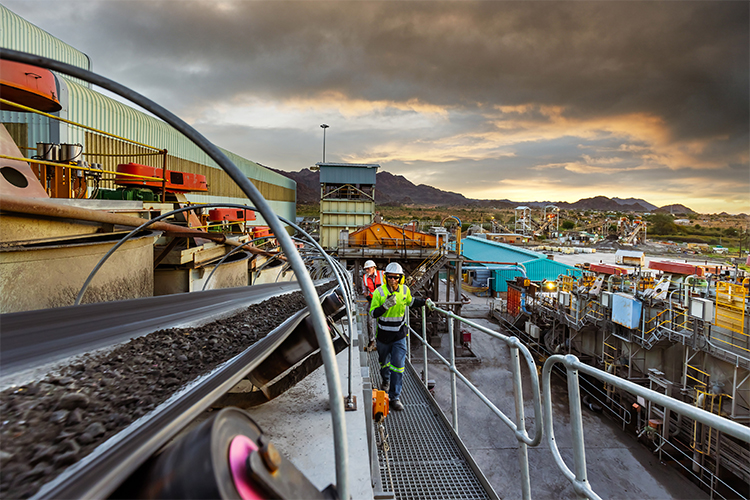
The board approved the recommencement of open-pit mining operations and nickel concentrate production at Nkomati Nickel Mine (Nkomati). This approval fulfils one of the conditions precedent to the nickel concentrate off-take agreement concluded with Boliden Commercial AB (Boliden) (the off-take agreement), as announced on SENS on 28 April 2026. Boliden has completed the responsible sourcing due diligence. The off-take agreement has not yet become unconditional and remains subject to the fulfilment or waiver, as applicable, of the remaining conditions precedent.
The board’s approval follows the completion of a DFS to restart open-pit operations at Nkomati and consideration of the alternative of continuing to maintain Nkomati on care and maintenance. The restart of Nkomati’s open-pit nickel mining operations represents a low-risk, immediately actionable development opportunity. The project leverages Nkomati’s existing mining and processing infrastructure, and is underpinned by a large polymetallic resource with a secured nickel concentrate off-take arrangement which re-establishes South Africa’s only primary nickel producer.
The recommencement of operations at Nkomati represents a value-accretive investment that unlocks a strategic resource, leverages existing infrastructure at low capital intensity, and is expected to generate compelling returns and sustainable cash flows.
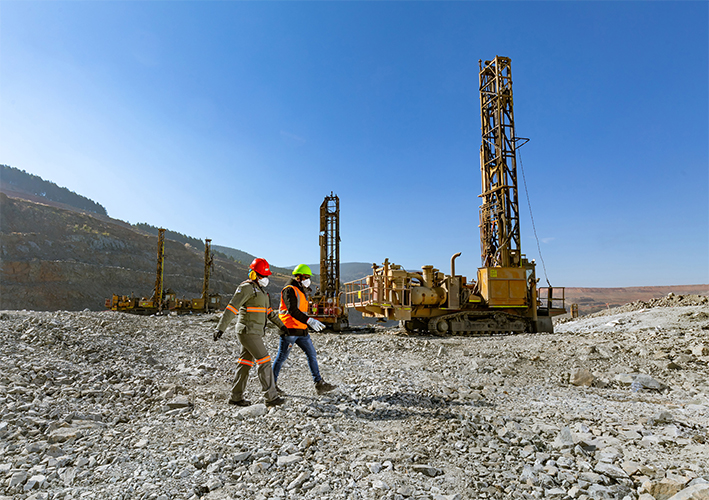
Estimated nominal project capital expenditure: R753 million
A life-of-mine of 13 years
Post-tax NPV: R764 million, using a nominal post-tax discount rate of 17.77%
Expected IRR: 28.36%
Expected payback period: 5.3 years
Estimated annual free cash flow: R616 million at steady-state production
Anticipated annual steady-state production: 56 065 tonnes of nickel concentrate per annum
Plant refurbishment commenced in July 2026
Mining operations are scheduled to recommence during October 2026
Iron ore exports
Assmang is a shareholder in the Ore Users Forum (OUF). This is an iron-ore producers industry company comprising four of South Africa’s main iron-ore producers. The OUF is actively working with Transnet and other industry peers to reform, stabilise and improve the ore export corridor rail and port network to Saldanha. The collaborative efforts between the OUF and Transnet have assisted in improving export ore rail and port services, with Assmang reporting a 1% period-on-period increase in export rail performance and shipping and sales volumes.
Manganese ore exports
The Manganese Producers Consortium (MPC) is a South African entity currently representing four major manganese ore producers that account for over 60% of South Africa’s exports. Although not shareholders yet, the majority of the remaining manganese ore producers support the efforts of the MPC. The MPC acts as a unified voice to drive logistics reforms in South Africa’s manganese rail and port sector, ensuring reliable transport and creating an operational and cost-competitive advantage for producers in South Africa. A primary objective is to optimise manganese ore exports over the long term by reducing overall logistics costs through enhanced capital and operational efficiency.
Furthermore, the manganese ore producers, in collaboration with Transnet Rail Infrastructure Manager, are working actively to increase the rail and port capacity to the Port of Saldanha. Simultaneously, Transnet will issue the request for qualification (RFQ) during Q1 F2027 for the design, build, construction and the operator of the new Ngqura Manganese Export Terminal, together with some Gqeberha manganese ore rail interventions. The MPC intends to respond to the RFQ to qualify for tendering for the request for proposal.
ARM Ferrous’ manganese export rail performance remained relatively stable, improving by 1% period-onperiod, while shipping and sales volumes decreased by 1%, mainly due to two delayed vessel loadings during June 2026.
The initiatives undertaken through the OUF and MPC demonstrate that collaboration can take many different forms and can drive developments across the logistics landscapes over the medium to long term, as South Africa’s logistics reforms are accelerated to turn around performance and provide competitive, cost-effective and value-accretive logistics solutions for the long-term sustainability of South African mining producers. Importantly, considerable unutilised production capacity remains at the ARM Ferrous operations, positioning ARM to unlock meaningful upside as rail availability continues to improve.
As previously reported, following the completion of a structured consultation process in terms of section 189 of the Labour Relations Act, Assmang resolved to permanently close the Cato Ridge Works complex. Operations ceased at the end of May 2025, and all affected employees were retrenched effective 31 August 2025.
Assmang executed the actions for the disposal of the Cato Ridge land, properties and houses to Assore SA PropCo, totalling R453 million (100%). On 27 June 2025, Assmang entered into binding agreements with Assore SA PropCo for the disposal of certain land parcels, properties and houses associated with the Cato Ridge complex. The aggregate purchase consideration is R453 million and will be implemented in two phases: phase 1 for R253 million and phase 2 for R200 million. The sale of phase 1 properties completed in March 2026, resulting in a profit of R225 million. The sale of phase 2 properties is expected to be completed in F2027.
ARM’s investment supports the continued advancement of the Berg project, which the completed prefeasibility study (PFS) confirms as a large-scale coppermolybdenum development with a maiden mineral reserve supporting a 28-year mine life.
Following completion of the PFS, the project is now progressing into feasibility-level technical and environmental studies, alongside the environmental assessment, permitting process and continued engagement with First Nations. The feasibility study report is planned for 2028, with the environmental impact assessment decision targeted for 2029 to 2030 and a final investment decision for approximately 2031. ARM will assess its continued participation through defined decision gates as the project is progressively derisked.
A decision was taken to place the Merensky project on care and maintenance in July 2024. Prior to this transition, key capital milestones were completed, including construction of the Merensky concentrator plant and establishment of the first two mining levels.
In October 2025, decline development selectively resumed on the Merensky on-reef decline shaft to establish additional dip levels. This targeted development enhances operational readiness, positioning the asset for an accelerated production ramp-up.
The immediate focus at Two Rivers is to fill the capacity of the UG2 concentrator plant. As a result, two Merensky stoping crews have since been deployed. The Merensky ore produced will be processed in the UG2 concentrator plant.
The development pathway for the Merensky project is expected to be completed in F2027, whereafter an investment decision will be made. The long-term fundamentals for the Merensky project remain accretive.
We distribute the value created by our activities to a range of stakeholders. In F2026, we distributed R11.3 billion of financial value on a segmental basis, as illustrated below and alongside.
(F2025: R12.2 billion)
(F2025: R6.2 billion)
(F2025: R2.6 billion)
(F2025: R2.4 billion)
(F2025: R0.5 billion)
(F2025: R0.2 billion)
(F2025: R0.2 billion)
1 (Loss)/profit attributable to non-controlling interests.
2 Segmental basis.
Refer to ESG report for discussion on how ARM contributes to the United Nations SDGs.
Download pdf| Performance indicator as at 30 June | Assured | F2026 | F2025 | F2024 | F2023 | F2022 | ||
| Economic and related core baseline indicators (segmental) | ||||||||
| Sales (R million) | 31 820 | 31 181 | 21 270 | 34 841 | 38 208 | |||
| Taxes (R million) | 2 325 | 1 798 | 1 608 | 3 469 | 4 817 | |||
| Headline earnings (R million) | 3 201 | 2 695 | 5 080 | 8 983 | 11 338 | |||
| EBITDA (R million) | 4 145 | 411 | 1 049 | 5 829 | 17 839 | |||
| Number of environmental administrative penalties/fines | 0 | 0 | 1 | 0 | 0 | |||
| Employee indicators (100% basis) | ||||||||
| Total number of ARM employees and contractors1 | 20 282 | 21 727 | 23 369 | 22 931 | 21 610 | |||
| – Employees (permanent) | 12 119 | 13 024 | 13 670 | 13 477 | 12 707 | |||
| – Contractors (mainly for capital projects) | 8 163 | 8 703 | 9 699 | 9 454 | 8 903 | |||
| Employee turnover (excluding contractors) (%) | 13.1 | 9.8 | 7.4 | 6.5 | 5.2 | |||
| Investment in employee training and development | ||||||||
| – Total expenditure (R million) | 379 | 446 | 399 | 371 | 198 | |||
| – % of payroll | 8.2 | 9.3 | 8.8 | 9.3 | 7.1 | |||
| Employment equity (% previously disadvantaged groups per category) | ||||||||
| – Top management | 73 | 73 | 73 | 75 | 67 | |||
| – Senior management | 73 | 72 | 70 | 66 | 64 | |||
| – Professionally qualified | 79 | 79 | 78 | 76 | 73 | |||
| – Technically qualified | 88 | 87 | 86 | 84 | 82 | |||
| Safety and health | ||||||||
| – Total work-related fatalities | ✓ | 0 | 3 | 1 | 1 | 2 | ||
| – Fatality frequency rate (FFR)2 | ✓ | 0.00 | 0.013 | 0.004 | 0.005 | 0.010 | ||
| – Lost-time injury frequency rate (LTIFR)2 | ✓ | 0.29 | 0.31 | 0.22 | 0.27 | 0.31 | ||
| – Total recordable injury frequency rate (TRIFR)2 | ✓ | 0.56 | 0.50 | 0.50 | 0.62 | 0.70 | ||
| – Reportable/serious accidents | 46 | 62 | 43 | 44 | 42 | |||
| – Total number of cases of noise-induced hearing loss (NIHL) submitted for compensation | ✓ | 20 | 26 | 23 | 15 | 13 | ||
| – Total number of other occupational diseases submitted for compensation | ✓ | 4 | 5 | 1 | 0 | 0 | ||
| – Total number of new pulmonary tuberculosis (PTB) cases – calendar 20253 | ✓ | 26 | 33 | 19 | 21 | 18 | ||
| – Employees and contractors receiving antiretroviral treatment at ARM operations | 1 536 | 1 265 | 1 320 | 1 239 | 1 398 | |||
| Number of lost man-days due to industrial action | 0 | 0 | 0 | 0 | 0 | |||
| Environmental indicators | ||||||||
| Total volume of water withdrawal (m3) | ✓ | 21 667 662 | 24 447 071 | 24 503 219 | 21 274 743 | 17 393 796 | ||
| – Total operational water withdrawal (m3) (municipal, surface and groundwater) | 21 223 131 | 24 052 699 | 23 253 064 | 18 291 911 | 16 808 679 | |||
| – Other managed water/diversions (m3) | 444 531 | 394 372 | 1 250 155 | 2 982 832 | 590 117 | |||
| Water output (m3) | 1 853 426 | 3 729 059 | 2 508 616 | 733 063 | 242 836 | |||
| Total energy used (GJ) | ✓ | 6 096 244 | 7 331 773 | 7 400 278 | 7 693 348 | 7 577 456 | ||
| Energy use | ||||||||
| – Electricity (MWh) | ✓ | 1 009 495 | 1 313 833 | 1 330 731 | 1 331 182 | 1 380 623 | ||
| – Diesel (000 litres) | ✓ | 69 227 | 72 693 | 78 433 | 79 213 | 71 241 | ||
| Emissions | ||||||||
| Carbon emissions (equivalent tonnes CO₂) (100%) | ||||||||
| – Scopes 1 and 2 | ✓ | 1 059 291 | 1 570 795 | 1 695 526 | 1 804 578 | 1 879 449 | ||
| – Scope 34 | ✓ | 47 279 192 | 59 673 597 | 55 690 667 | 59 402 936 | * | ||
| Direct emissions5 | ||||||||
| – NOx (tonnes) | 0 | 359 | 391 | 374 | 366 | |||
| – SOx (tonnes) | 0 | 221 | 234 | 249 | 257 | |||
| – Particulate matter (tonnes) | 0 | 288 | 311 | 213 | 276 | |||
| Corporate social responsibility | ||||||||
| Total CSI and LED spend (R million) | ✓ | 108.8 | 115.7 | 189.0 | 123.9 | 150.4 | ||
| – CSI (R million) | 52.5 | 26.3 | 53.1 | 41.4 | 34.6 | |||
| – LED (R million) | 56.3 | 89.4 | 135.9 | 82.5 | 115.8 | |||
| ARM BBEE Trust6 (R million) (projects) | 18.0 | 23.0 | 23.2 | 33.1 | 19.8 | |||
| Governance indicators | ||||||||
| ARM’s King IV disclosure framework7 | ✓ | Y | Y | Y | Y | Y | ||
| Board diversity | ||||||||
| – Diversity (black) (%) | 54 | 53 | 60 | 56 | 56 | |||
| – Gender (female) (%) | 23 | 27 | 20 | 22 | 25 | |||
| – Independent non-executive directors (%) | 77 | 80 | 80 | 67 | 63 |
Non-financial data is stated on a 100% basis.
| 1 | Total number of ARM employees and contractors as at 30 June 2026. |
| 2 | Injury rates are measured per 200 000 man-hours and include both ARM employees and contractor incidents. |
| 3 | Reported for the 12 months to December, in line with regulatory reporting requirements. |
| 4 | Calculation based on available data. |
| 5 | Cato Ridge ceased operation and stack emissions monitoring in F2025. |
| 6 | Reported for the 12 months from March 2025 to February 2026. |
| 7 | King IV application register from F2022 to F2025. |
| ✓ | Limited assurance provided by Deloitte & Touche in F2026. |
| * | Not reported. |